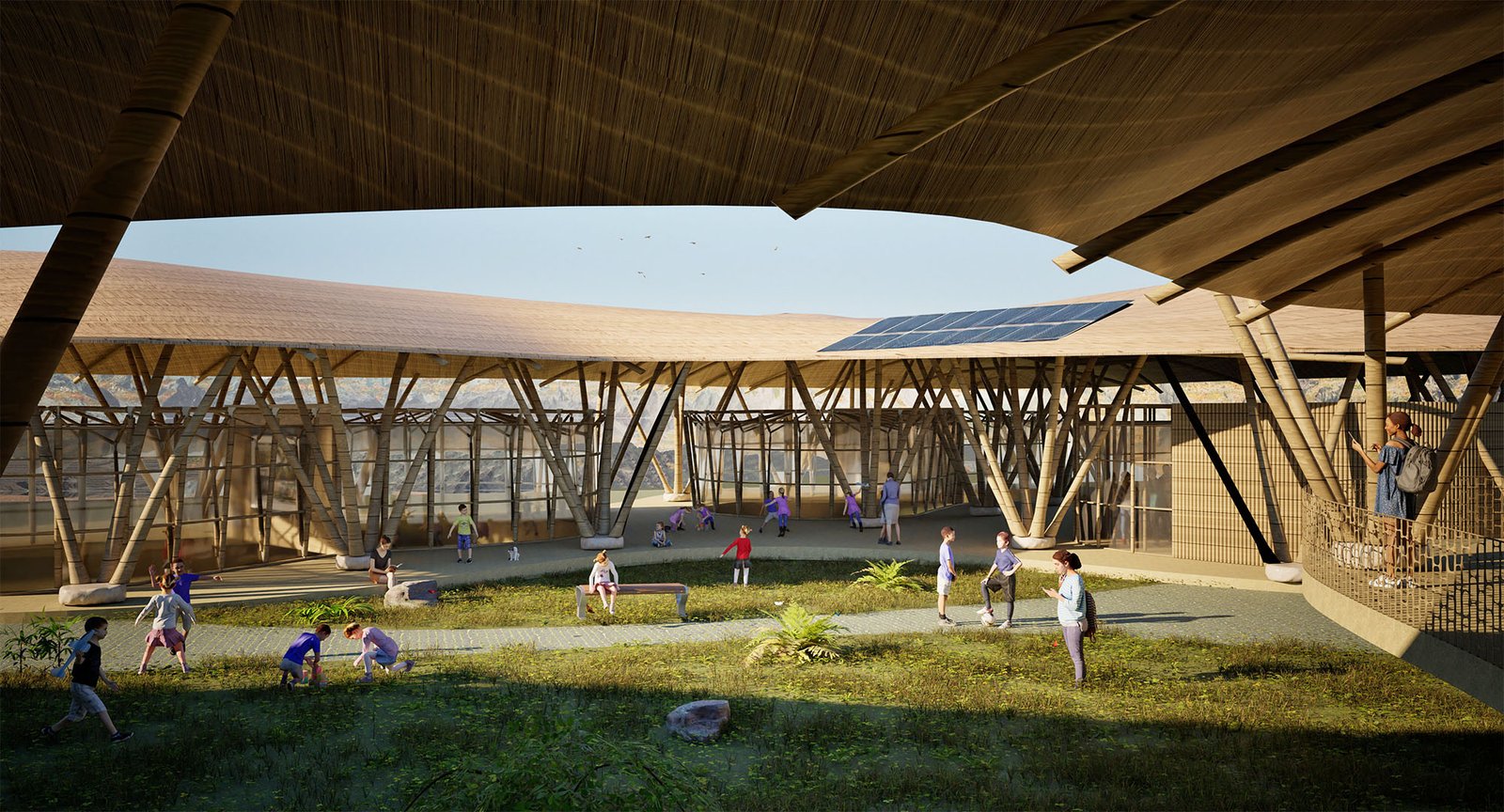
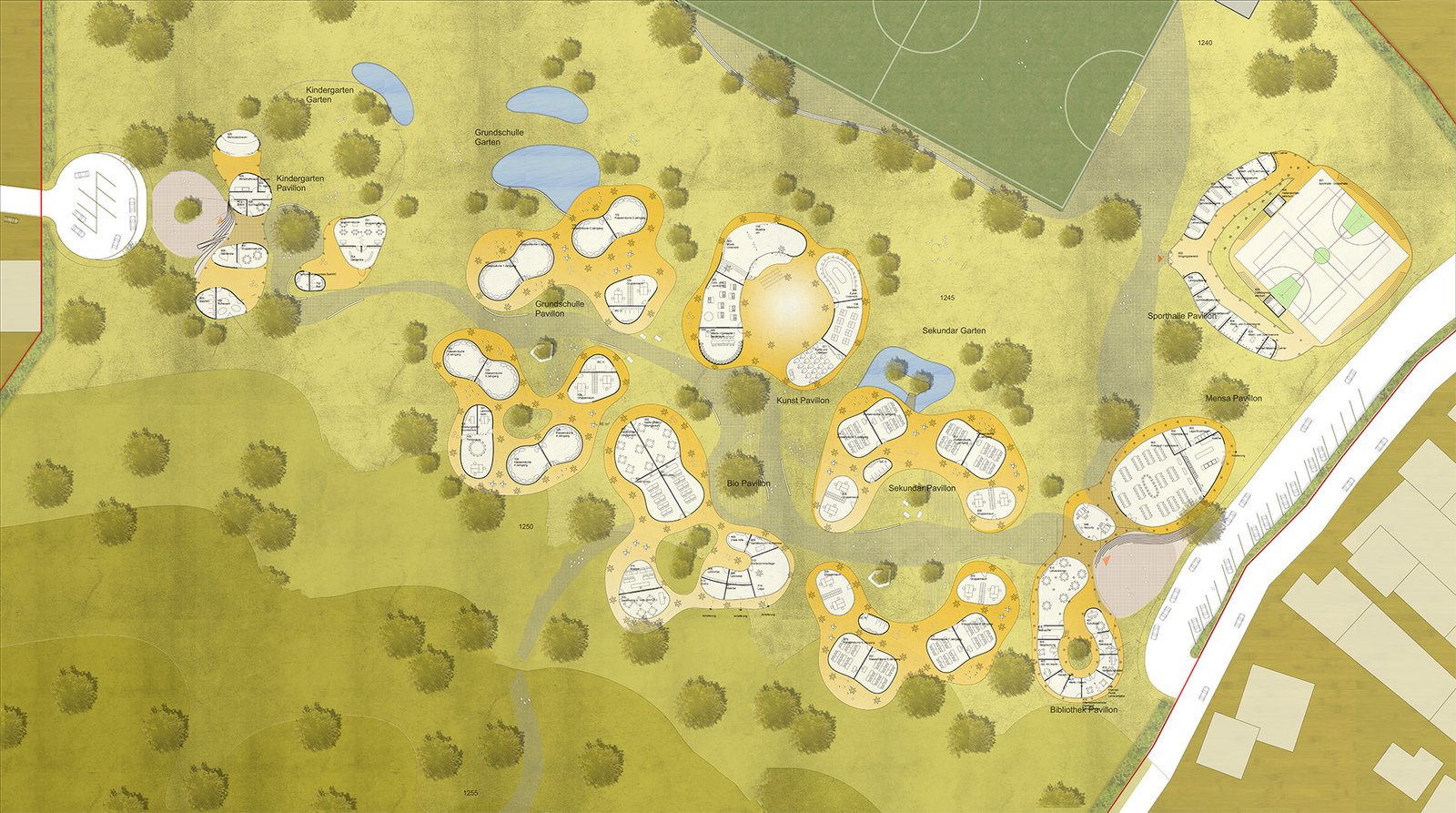
The organic form that shapes the design is inspired by the natural context of the immediate surroundings. The division into individual building volumes derives from the organizational structure of the school’s functions. A central pathway connects these volumes into a cohesive ensemble. Along this pathway, from west to east, the functions are arranged according to the students’ grade progression, from kindergarten to high school. The main construction material is bamboo, chosen for its sustainability, versatility, and strong connection to the natural environment.
The school grows with the students, supported by the organic design language. This stands in contrast to traditional school building typologies and creates a creative, stimulating atmosphere. The design responds to the rural context and the strong presence of nature by integrating the landscape naturally and seamlessly.
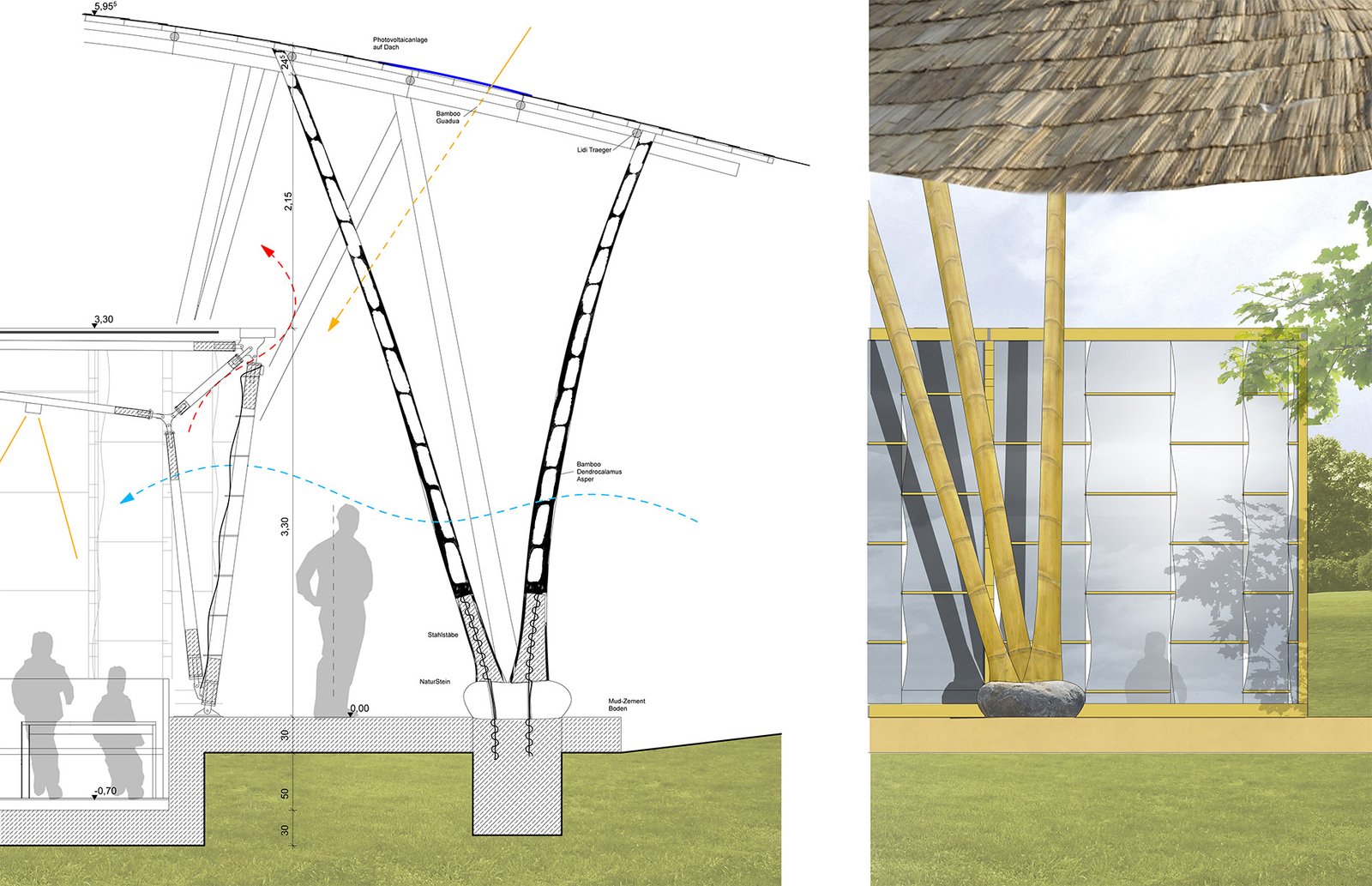
The buildings consist of expansive roofs under which the various uses are arranged as independent volumes. In the structural connection of the bamboo elements, both industrial fasteners and traditional methods, such as tenon and dowel techniques, are used. Bamboo is also chosen for the partition walls between classrooms due to its acoustic properties. Inside the classrooms, the organic design language supports alternative group configurations in contrast to traditional rows of chairs.
Solar Energy: The large roof surfaces are used as an active energy resource. Photovoltaic panels generate renewable electricity, reducing the school’s dependence on external energy supplies. In addition, solar thermal systems provide hot water for daily use, supporting both hygienic and operational needs.
Water: Rainwater is collected in cisterns and reused for non-potable purposes. Together with the cooling effect of the lush vegetation and shaded outdoor areas, these strategies help to create a comfortable microclimate for students and staff.
error: Content selection and downloading are disabled due to copyright